


Why is exercise important for kids? First of all, let’s look at the difference between exercise and physical activity.
Physical activity is movement that is carried out by the muscles that requires energy. In other words, any movement one does is actually physical activity. Exercise is planned, structured, repetitive and purposeful movement that is intended to improve or maintain physical fitness.
Children who exercise are more likely to maintain an active lifestyle as an adult, but what child wants to consciously ‘exercise’? It’s hard enough for some adults to find the motivation, but as adults, we’re more aware of the importance of moving and the risks when we don’t move our bodies enough. Exercise should be enjoyable at all ages, but it’s especially important that children enjoy moving to build long lasting habits and help them to achieve and maintain optimal physical and mental health.
Engaging in physical activity or exercise offers children the following benefits:
– Helps to achieve and maintain a healthy body weight
– Increases positive mental health and helps children to relax
– Improves self-esteem and confidence
– Helps to build strong bones, muscles and joints
– Promotes healthy growth and development
– Reduces the risk of developing, and helps to manage, chronic disease such as type 2 diabetes and cardiovascular disease
– Reduces the risk of, and assists with rehabilitation from, some cancers
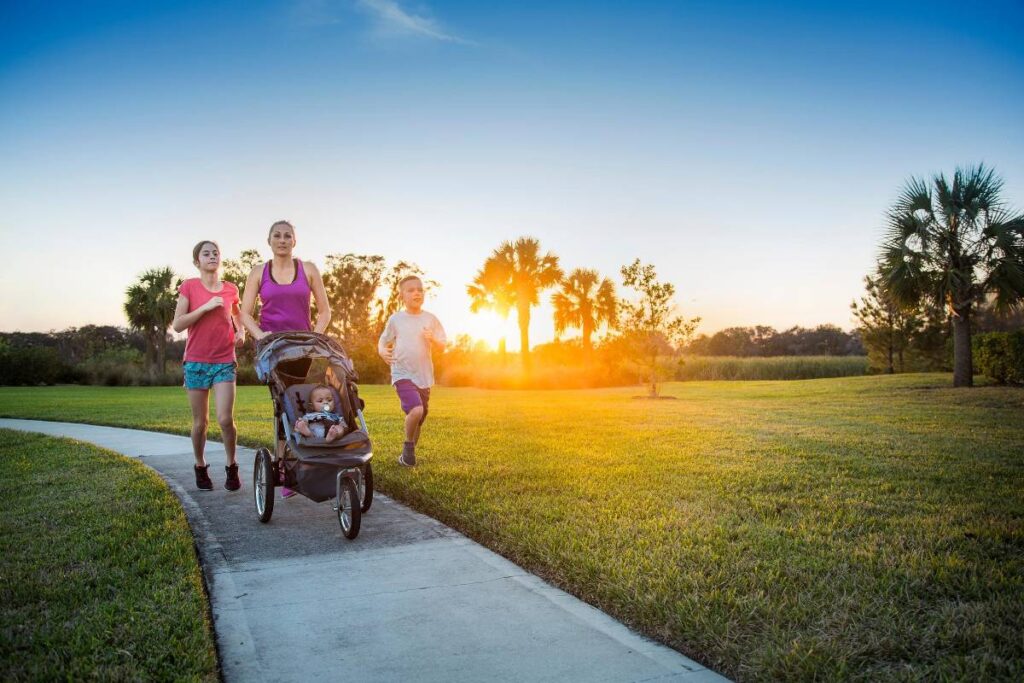
It’s not just the physical and mental benefits that makes being active during childhood important, there are also a host of social benefits. Encouraging play outdoors often involves interaction with other children and promotes active play (such as throwing a ball or riding a bike).
Active Children = Active Adults
Why is it important that children get moving when they’re young? Because active kids develop physical literacy!
Physical literacy is the knowledge and understanding of how to move your body, the confidence and motivation to move, and the social skills to be active with other people.
Research suggests that engaging in physical activity as a child predicts participation in physical activity and exercise as an adult. This ensures the benefits of physical activity carry through from childhood to adulthood, reducing the risk of chronic disease, illness and injuries. Conversely, those who do not participate in physical activity as a child are unlikely to be active as adolescents and adults; they are less competent, confident and motivated to move.
Read more in the Exercise for Kids eBook! Download here.

Written by Exercise & Sports Science Australia. Peer reviewed by Exercise and Sports Science Professionals.