
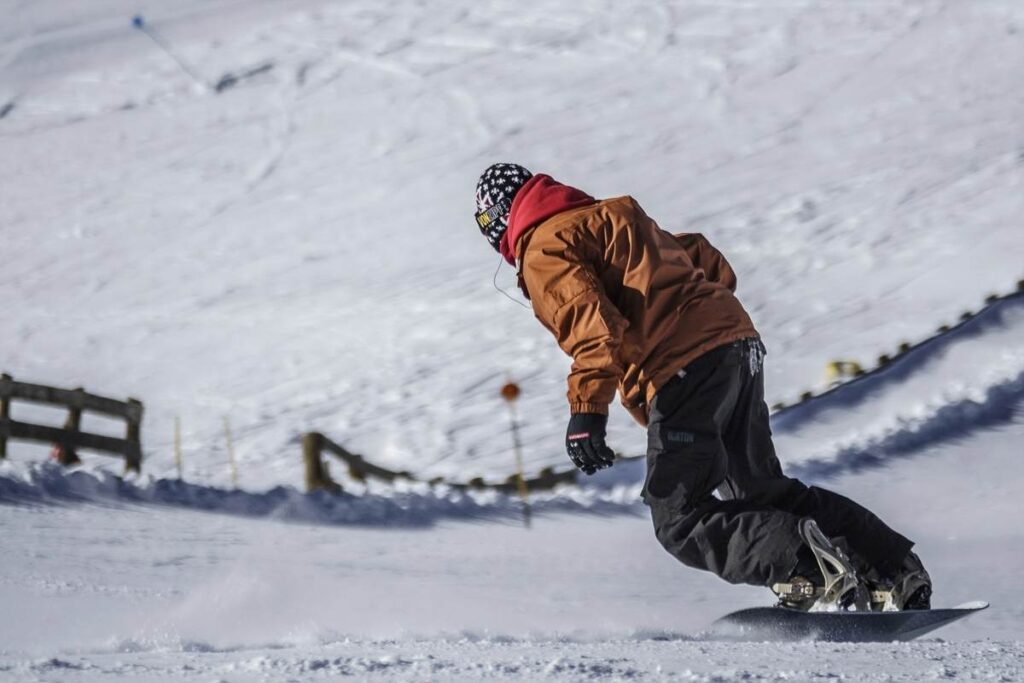


Snowboarding is a winter alpine sport that can be done either recreationally or competitively. It involves descending down a mountain covered in snow, with a board attached to a riders feet. It’s considered to be an “extreme sport” as it elicits a thrill response when part-taking. For anyone who has given it a go, you’ll also know it’s a full-body workout that demands a lot of your muscles!
The low down on snowboarding in Australia
You wouldn’t typically associate Australia with snow sports, however with the recent success of Scotty James and Torah Bright in the snowboarding half pipe, the popularity of the sport has risen in the past decade. Whilst Australia does not have the typical snowfall compared to Europe and Northern America, it is fair to say we punch above our weight category with our successful riders.
In competition, snowboarding can be categorised into three different categories they are;
1. Freestyle (half pipe, slope style, big air).
2. Freeriding (back country / natural terrain)
3. Alpine (parallel slalom, giant slalom)
Recreationally, the sport of snowboarding has many benefits such as:
- Improve aerobic capacity (VO2 max).
- Improved lower limb isometric strength.
- Improved lower limb muscular power.
- Improve gross motor function.
- Improve standing balance.
- Positively influence on wellbeing.

Injury risks when snowboarding
Snowboarding is considered an ‘extreme sport’ because it’s characterised by high speeds and high risks. It’s a sport that involves a great deal of technical ability, therefore risk of injury is greater in those who are beginning the sport or have less than 1 years’ experience. The greatest management for risk mitigation is to have a lesson to begin with.
Injury Prevention
There is a two-thirds greater risk for upper limb injuries compared to lower limb injuries when snowboarding, with the most common injury site involving the wrist. Wrist guards may be useful for those in the beginning phases of snowboarding as they have been shown to reduce wrist injuries by >2%. Some common lower limb injuries include soft tissue injuries to the knees involving the ligaments or ankle sprains. Head injuries are also not uncommon. Concussions or even serious brain injury can occur from falling and hitting your head on the snow, or collisions with another object (tree or person). Helmets are highly recommended no matter what skill level and experience is had on the snow.
Snowboarding is a whole-body workout
Whether this is your first time going to the snow, or your first time going for the season, you’re going to feel soreness in muscles you never knew you had the day afterwards. Snowboarding is demanding on the body. It requires high velocity muscular strength and power to withstand the high amounts of biomechanical force that goes through your legs, particularly when navigating black runs with lots of moguls and sharp turns.
Snowboarding relies on many major muscles groups to function:
Upper body strength to push yourself up from sitting to standing position.
Lower limb power to dig into sharp turns and for the risk takers to allow for greater velocity when taking off from a jump.
Core strength through the abdominals and obliques to aid with protecting the spine, balance, and transferring from sitting to standing, particularly after falling over or strapping on bindings after getting off the chair lift.
Lower limb isometric strength to help stay in a half squat position when riding for long periods of time and reducing muscular pain.
Lower limb strength to absorb biomechanical forces going through the legs and navigating up hills when downhill may not be appropriate.
Balance to assist with anterior / posterior weight shift to connect turns and to avoid falls or injuries.

Exercises to prepare your body for snowboarding
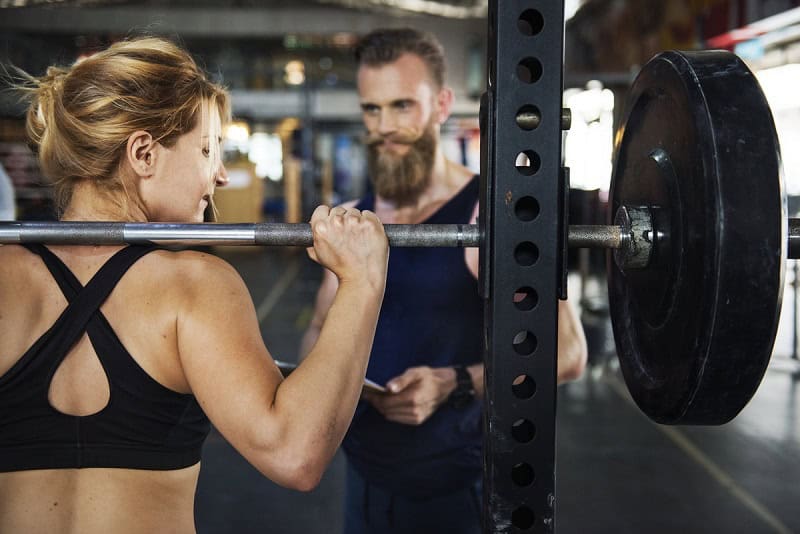
Snowboarders should incorporate lower limb plyometric, upper limb strength, lower limb strength, core strength, and balance to best prepare themselves for the snow. We’ve included a sample workout below:
- Squat Jump – 3sets x 5repsWall Sit – 3set x 30 – 60 seconds
- Side-to-side slide with socks (on floor boards) – 3sets x 15reps each side
- Squat and Pause – (2 seconds down, 3 seconds pause, 1 second up) 3sets x 12 – 15reps
- Push-ups (on toes or knees) – 3sets x 6-10reps
- Triceps Dips (on a chair) – 3sets x 6-10reps
- Abdominal Crunch – 3sets x 8 – 10reps
- Banded Paloff Press – 3sets x 8 – 12reps
- Rocking Board (anterior / posterior) weight shift 2sets x 45 seconds
Remember, the above exercises are just examples and we always recommend getting individualised exercise prescription.
Getting the right advice
If you take your snowboarding seriously and want to get your body ready for peak performance, getting the right advice is crucial. An accredited exercise professional can build an individualised exercise program to suit your goals, current fitness level and ability. To find an expert near you, click here.
Written by Nick Scarlett. Nick is an Accredited Exercise Physiologist and director at Hills Exercise Physiology.
References:
Nasuti, G., & Temple, V. A. (2010). The risks and benefits of snow sports for people with disabilities: a review of the literature. International journal of rehabilitation research, 33(3), 193-198.
Bladin, C., McCrory, P., & Pogorzelski, A. (2004). Snowboarding injuries. Sports Medicine, 34(2), 133-138.
Hébert-Losier, K., & Holmberg, H. C. (2013). What are the exercise-based injury prevention recommendations for recreational alpine skiing and snowboarding?. Sports medicine, 43(5), 355-366.