


This article was written by Accredited Exercise Physiologist Samuel Padarcic, General Manager of The Biomechanics.
As a father and Accredited Exercise Physiologist who works with women throughout pregnancy and beyond, I hear the same fear come up constantly: “Is it safe to keep lifting?” “Should I stop now that I’m pregnant?” “What if I hurt the baby?” Naturally this inspired me to deep dive into the current research to see how it stacks up against fear-based messaging.
The old rules were mostly guesswork
Many of the restrictions women have been told about exercise in pregnancy were never based on solid evidence. They came from caution, not data. A major 2020 review looked at the reasoning behind common exercise restrictions and found most of them, including things like obesity, having high blood pressure, a history of miscarriage, carrying twins, or having previously had a premature birth, are no longer considered reasons to avoid exercise altogether (Meah et al., 2020).
That doesn’t mean every condition is fine to push through without guidance. It means the list of genuine reasons to stop or modify exercise is much shorter than most people assume, and every pregnancy deserves an individual conversation rather than a blanket rule.
Is heavy lifting actually safe?
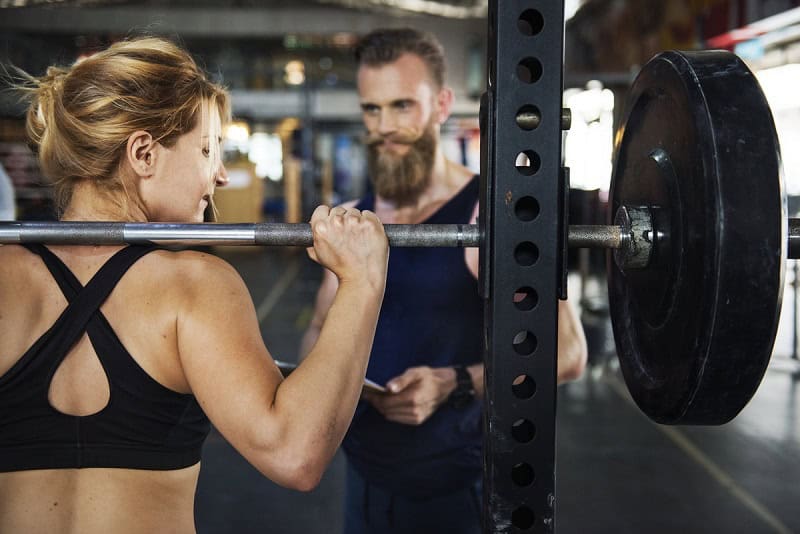
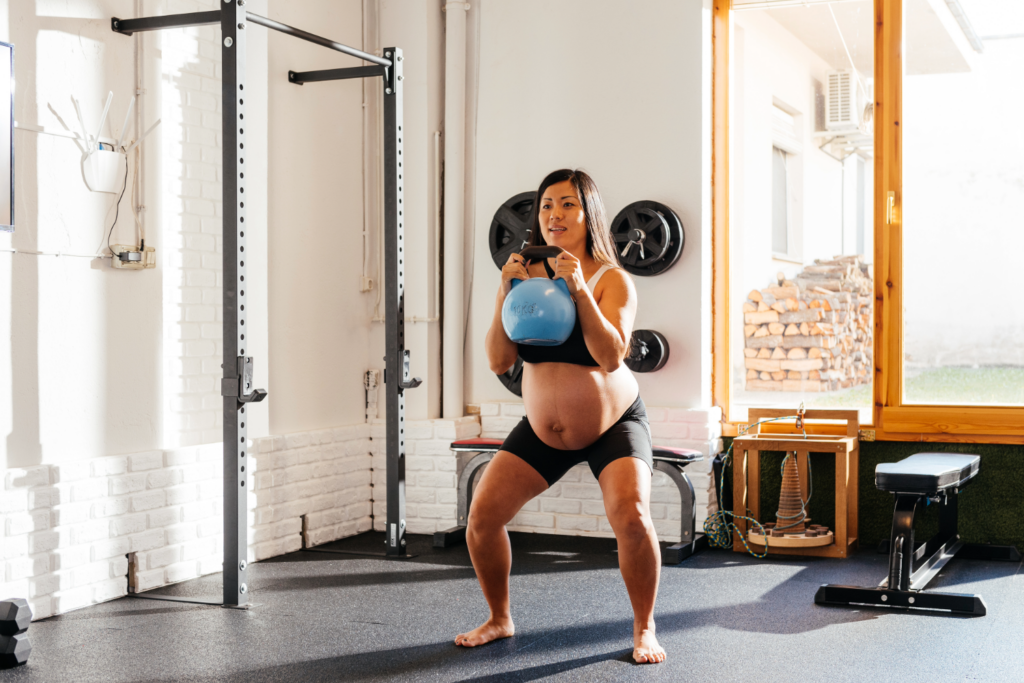
This is the one that often scares women and their health professionals the most, but it’s also where the newest research is the most reassuring. A 2025 study directly tested experienced lifters performing heavy squats, bench presses and deadlifts around 26 weeks into pregnancy, including while holding their breath to brace (something long assumed to be risky). Researchers monitored the baby’s heart rate and blood flow through the umbilical cord during every set (Moolyk et al., 2025).
The result: no drops in the baby’s heart rate, normal blood flow throughout, and every baby born healthy. This applies specifically to women who were already lifting before pregnancy and continued at a level their body was used to, not those starting heavy lifting from scratch mid-pregnancy. It’s evidence that an established strength training regime doesn’t need to be abandoned.
What about pelvic floor and prolapse?
This is another common concern when it comes to heavy lifting in pregnancy. Prolapse happens when the pelvic organs lose some of their normal support and shift downward. The good news: in a 2023 survey of nearly 700 pregnant women who lifted heavy, prolapse symptoms were uncommon, only 3% during pregnancy and 14% after birth. A separate, larger study of almost 4,000 women found something even more reassuring: those lifting the heaviest weights were actually less likely to report prolapse symptoms than women lifting lightly or not exercising at all, even accounting for other risk factors like age and childbirth history (Prevett et al., 2023; Forner et al., 2020). Simply put, the best evidence available doesn’t support the idea that lifting heavy weights raises your risk of prolapse. If anything, staying strong may actually help protect against it.
That said, incontinence does tend to be more common among women doing high-impact training generally, not something specific to heavy lifting technique. If you notice symptoms of urinary incontinence during or after pregnancy, know that it’s common, and it’s worth raising with your Exercise Physiologist or healthcare provider rather than staying quiet. There are ways to manage and improve it, and support is available; you don’t have to just put up with it.
The benefits go well beyond “safe”
The research backs this up. Regular strength training in pregnancy is linked to less back and pelvic pain, better sleep, more energy, and reduced anxiety (Redondo-Delgado et al., 2025). A separate, large 2025 review combining data from over 47,000 pregnancies also found resistance training linked to lower rates of complications including gestational diabetes and high blood pressure disorders (Prevett et al., 2025). This isn’t just about avoiding harm. It’s about actively feeling better and functioning better through one of the biggest physical changes your body will ever go through.
Despite the many documented benefits, only around 3 in 10 pregnant women in Australia currently meet physical activity guidelines (Australian Institute of Health and Welfare [AIHW], 2019). The gap isn’t a lack of evidence. It’s a lack of confidence, often inherited from outdated advice and unnecessary fear.
Your body isn’t fragile. It’s capable.
Pregnancy is one of the most incredible, yet physically demanding things a human body can do. So, that’s not a reason to wrap your body in cotton wool, instead it’s a reason to prepare it. For most healthy pregnancies, staying strong isn’t just something you’re “safe to do,” it’s something worth actively participating in. It supports your own health through the pregnancy itself, through birth, and through the recovery that follows. Above all else, you deserve to feel strong!
If you’re unsure about lifting, whether that’s because of a specific health condition, pregnancy complication, or you’re simply not sure how to adapt your training, that’s exactly what an Accredited Exercise Physiologist (AEP) is here for. Book in with your local AEP for guidance tailored to you and your pregnancy.
References
AIHW (Australian Institute of Health and Welfare) (2019). Physical activity during pregnancy 2011-12. AIHW, Australian Government.
Forner, L. B., Beckman, E. M., & Smith, M. D. (2020). Symptoms of pelvic organ prolapse in women who lift heavy weights for exercise: A cross-sectional survey. International Urogynecology Journal, 31(8), 1551–1558. PMID: 31813038
Meah, V. L., Davies, G. A., & Davenport, M. H. (2020). Why can’t I exercise during pregnancy? Time to revisit medical ‘absolute’ and ‘relative’ contraindications. British Journal of Sports Medicine, 54(23), 1395-1404. PMID: 32513676
Moolyk, A. N., Wilson, M. K., Matenchuk, B. A., Bains, G., Gervais, M. J., Wowdzia, J. B., & Davenport, M. H. (2025). Maternal and fetal responses to acute high-intensity resistance exercise during pregnancy. British Journal of Sports Medicine, 59(3), 159-166. PMID: 39694629
Prevett, C., Gingerich, J., Sivak, A., & Davenport, M. H. (2025). Resistance training in pregnancy: Systematic review and meta-analysis of pregnancy, delivery, fetal and pelvic floor outcomes and call to action. British Journal of Sports Medicine, 59(16), 1173-1182. PMID: 40610191
Prevett, C., Kimber, M. L., Forner, L., de Vivo, M., & Davenport, M. H. (2023). Impact of heavy resistance training on pregnancy and postpartum health outcomes. International Urogynecology Journal, 34(2), 405-411. PMID: 36331580
Redondo-Delgado, P., Blanco-Giménez, P., López-Ortiz, S., García-Chico, C., Vicente-Mampel, J., & Maroto-Izquierdo, S. (2025). Effects of strength training on quality of life in pregnant women: A systematic review. Acta Obstetricia et Gynecologica Scandinavica, 104(7), 1231-1243. PMID: 40230063