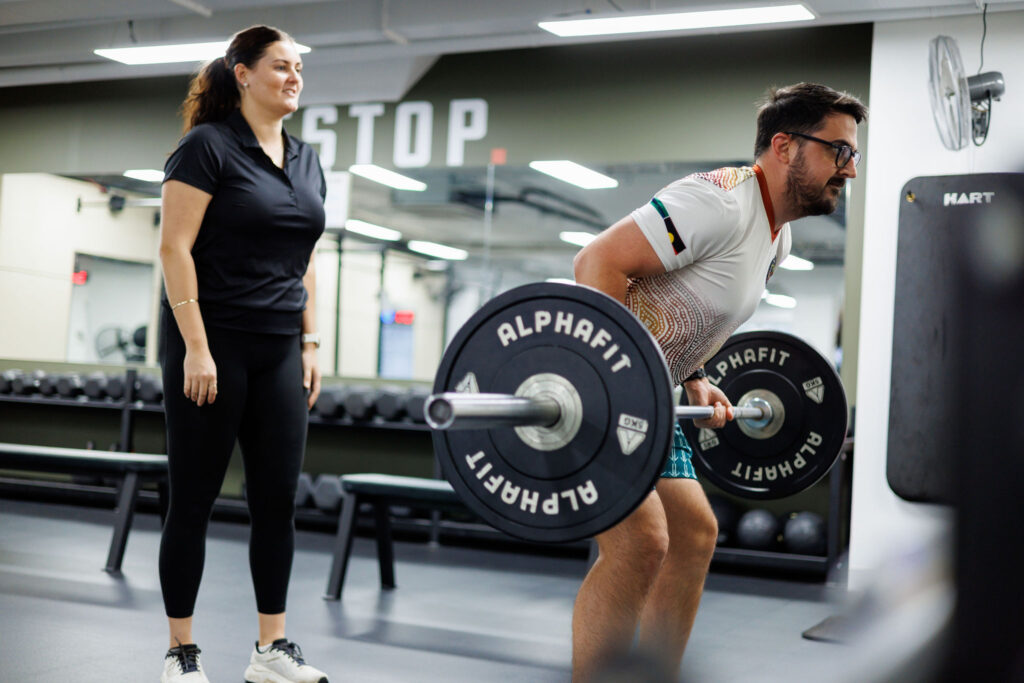



Postural orthostatic tachycardia syndrome (POTS) can affect an individual’s cardiovascular health and quality of life if untreated. While there are no specific medications for POTS, supervised exercise guided by an Accredited Exercise Physiologist can help improve heart and blood volume, significantly alleviate symptoms and enhance overall well-being.
What is pots?
Postural orthostatic tachycardia syndrome (POTS) is a complex medical condition characterised by a rapid increase in heart rate upon transitioning from a reclined or seated position to standing. When moving from lying down to sitting or standing, POTS leads to difficulty maintaining normal blood pressure (5).
The heart reacts to this change in posture to immediately compensate for the drop in blood pressure by increasing heart rate, an outcome referred to as “tachycardia” (heart rate over 100 beats per minute) (5).
In addition to the heart rate changes as a result of the postural change, people who have POTS will usually have smaller hearts and less blood volume compared to people without the condition (3). This affects cardiovascular health and fitness, as well as the ability to perform common daily tasks (2). POTS typically affects females of childbearing age, but men can also have the condition.
Symptoms of pots
There are a number of symptoms resulting from POTS. These symptoms include:
- Sudden change in blood pressure
- Increased heart rate
- Nausea
- Dizziness
- Anxiety
- Sweating
- Exercise intolerance

Managing pots through exercise
According to the Australian POTS Foundation, there are currently no POTS-specific medications available on the Pharmaceutical Benefits Scheme that can assist with the management of POTS (1). Not having access to medication makes living with this chronic condition more complex.
Physical activity and exercise can often exacerbate POTS symptoms, making it seem counterintuitive to use exercise to help manage POTS (4). However, exercise is an effective method in managing POTS symptoms when exercise is supervised by a specialised exercise professional such as an Accredited Exercise Physiologist.
Regular exercise leads to increased physical capacity, meaning it can assist in increasing the time it takes for symptoms to arise when being active. After 3 months of regular exercise, people with POTS benefit from an increase in the volume of the heart muscle and an increase in blood volume (4).
Additionally, research has shown that regular supervised exercise can drastically improve POTS symptoms in just 3 months (6). The symptoms can reduce so much that a person may no longer meet the criteria for having POTS. An added bonus of exercise for the management of POTS is an improvement in mental health and overall quality of life (3). Exercise can help make daily tasks more manageable and give those with POTS a powerful tool to manage their health.
What exercise is recommended for pots?
When beginning exercise for the management of POTS it is recommended to begin with aerobic and strength-based exercise that focuses on the lower body (3).
Examples of suitable introductory aerobic exercises for the management of POTS include:
- Recumbent exercise like cycling
- Rowing
- Swimming for aerobic exercise
A strength training program should involve floor-based exercises as they are recommended for building muscle strength whilst limiting POTS symptoms. Suitable floor-based strength exercises to begin with include:
- Glute bridges
- Planks
- Clams
- Side-lying leg raises
Aerobic and strength training can be progressed through resistance bands, weights, and seated exercises as exercise tolerance increases.
Enlisting the expertise of an Accredited Exercise Physiologist empowers individuals to embark on a tailored fitness journey to help manage their symptoms. With their guidance, a personalised exercise regime is carefully crafted to evolve in sync with each client’s unique circumstances and goals. This approach creates a responsive exercise experience, prioritising client safety and well-being.
Reach out to an Accredited Exercise Physiologist (AEP) to help you with a personalised exercise plan and support you on your journey with POTS. Find your closest AEP here.
Written by Kristen McCluskey. Kristen is an ESSA Accredited Exercise Physiologist at Be Physiology.
References
- Australian POTS Foundation. (2021). What is POTS? . Retrieved from https://potsfoundation.org.au/
- Bruce, B. K., Harrison, T. E., Bee, S. M., Luedtke, C. A., Porter, C.-B. J., Fischer, P. R., . . . Weiss, K. E. (2016). Improvement in functioning and psychological distress in adolescents with postural orthostatic tachycardia syndrome following interdisciplinary treatment. Clinical Pediatrics, 55(14), 1300-1304.
- Fu, Q., Levine, B. D. (2018). Exercise and non-pharmacological treatment of POTS. Autonomic Neuroscience, 215, 20-27.
- Fu, Q., VanGundy, T. B., Shibata, S., Auchus, R. J., Williams, G. H., & Levine, B. D. (2011). Exercise training versus propranolol in the treatment of the postural orthostatic tachycardia syndrome. Hypertension, 58(2), 167-175.
- Johnson, J. N., Mack, K. J., Kuntz, N. L., Brands, C. K., Porter, C. J., & Fischer, P. R. (2010). Postural orthostatic tachycardia syndrome: a clinical review. Pediatric neurology, 42(2), 77-85.
- Shibata, S., Fu, Q., Bivens, T. B., Hastings, J. L., Wang, W., & Levine, B. D. (2012). Short‐term exercise training improves the cardiovascular response to exercise in the postural orthostatic tachycardia syndrome. The Journal of physiology, 590(15), 3495-3505.
The original blog post is available at https://bephysiology.com.au/pots/