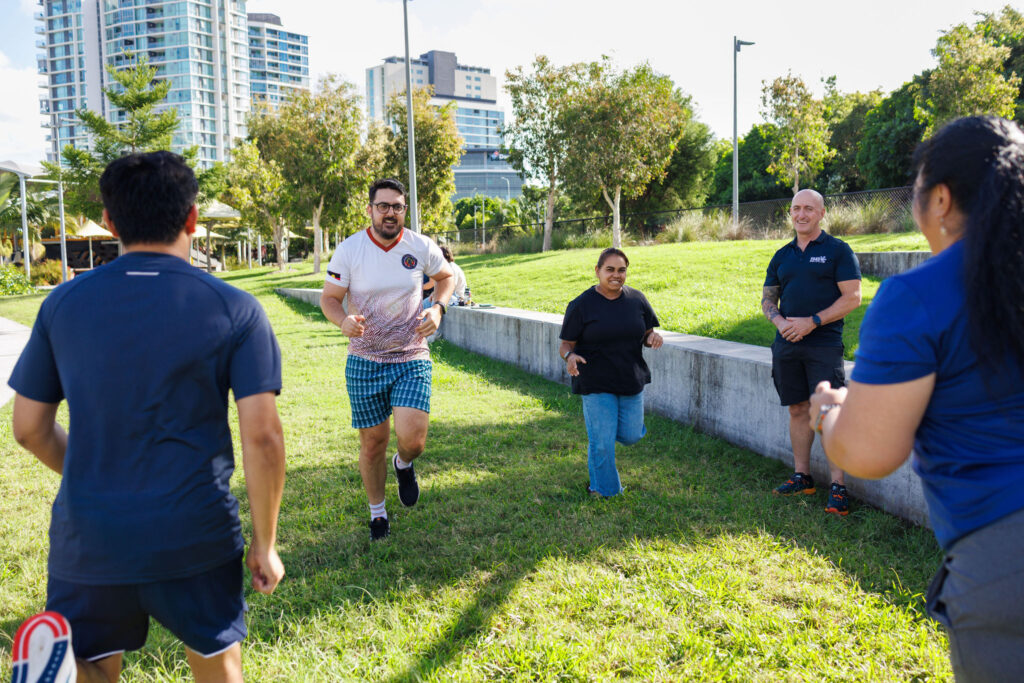




More than 50% of Australians will make an exercise or health-related new year’s resolution each year. While we have the best of intentions when setting this goal, as our lives return to “normal” in the new year, exercise often drops to the bottom of the priority list, resulting in half of us stopping our regimen before Valentine’s Day. Here are some tips to set yourself up for success, including finding your why for exercise, the best ways to set goals, and key factors that will help you stick with exercise long-term.
Find your way
Before setting an exercise-related New Year’s resolution, think about why you want to exercise. We all know we should be exercising regularly, but that is not enough of a reason to keep your motivation levels high when you are starting out.
Ask yourself, what does exercise mean to me? Why am I doing it? You may want to be able to walk up the stairs without puffing, carry the groceries from the car in one trip, keep up with your grandkids or reduce your stress levels. Whatever the reason, it needs to mean something to you and not just be why you think you should be doing it.
Setting smart goals
Once you know why you are exercising, it’s time to set goals to work towards. You should consider both short- and long-term goals, using the short-term goals to help you stay on track on your way to achieving your long-term goals. When setting your goals, they should be SMART:
Specific – make sure your goal is clear and well defined.
Measurable – make your goal is concrete so you can keep track of your progress.
Attractive – enjoyment is a key predictor of success; pick something you are eager to do.
Realistic – set yourself a goal that is challenging, but within your reach.
Time-Targeted – give your goal an end point, so you know if/when you have achieved it.

An example of a goal that is not SMART is I want to be more active. This goal is not specific (i.e., what is “active”), you would not be able to measure your progress towards it, and there is no timeframe placed on it.
A better, SMART version of this goal would be I want to walk 20 minutes, three times per week, over the next month. This goal has a clear definition of active (walking 20 minutes, three times per week), you could measure your progress to this goal using an exercise diary, it is a realistic amount of exercise to do when starting out (rather than saying you want to run a marathon), and there is an endpoint (one month).
Now ink it, don’t just think it! Once you have chosen your goal/s, write it down on a piece of paper and stick it somewhere where you will be able to see it every day to remind yourself of what you are working towards.
I’m ready to exercise! but how do i stick with it?
Now it’s time to start out on your exercise journey and work towards achieving your goals. As mentioned, it can be hard to stick with a new exercise regimen. Luckily, there are a few things you can do to increase your chances of sticking with exercise in the long-term!
- Find a type of exercise you enjoy – if you don’t enjoy something, why would you continue to do it? There are hundreds of ways for you to be physically active, you don’t need to force yourself to do an activity you don’t enjoy. Exercise does not have to mean going for a run or lifting weights in the gym. Exercise could be dancing, skipping rope, swimming, group classes like Pilates, playing sport, walking, hiking, or even yard work (mowing, gardening). Try a few different activities until you find one you enjoy, then you will be more likely to stick with it.
- Recruit an exercise buddy – research has shown that exercising with another person can help you stick with it because it makes exercise more enjoyable and keeps you accountable. Your exercise buddy could be a family member, friend, co-worker, a community group, or a local sports team.
- Make a plan – creating a plan that considers when, where and how your exercise will be done helps to form exercise habits. Firstly, the when. Schedule exercise into your week as you would appointments, meetings, or catch-ups with family and friends. Pick a time that suits you and your body – if you like to start your day early, schedule exercise in for the morning; if you have more energy later in the day, schedule exercise in the afternoon/evening. Secondly, the where. Will you exercise at home, a local gym, or outdoors? Finally, the how. Think about the nitty gritty of your exercise – how long will your sessions take, will it be done in one session or a few blocks spread throughout the day? Will you need specific equipment, transport, and/or clothing?
- Make a back-up plan – things pop up all the time that could stop us from being able to do an exercise session. Making a back-up plan will help reduce the number of sessions you miss when obstacles pop up. For example, if you plan to walk outdoors and it is too hot/wet, what will you do instead?
Want some extra support?
Accredited Exercise Physiologistcan set you on the right path, whether that be helping you set achievable goals, keeping you accountable, or finding the type of exercise that is best for you. Find your closest AEP here.
Written by Dr. Emily Cox. Emily is an ESSA Accredited Exercise Physiologist and Lecturer in Clinical Exercise Physiology at the University of Newcastle.