


Scoliosis is lateral curvature of the spine, often diagnosed in childhood and adolescence. It causes wedging of the vertebrae and discs, where one side is narrower and one is wider. This changes the shape of the spine to cause lateral curvature with rotation.
Scoliosis is diagnosed when you have a lateral curvature with a cobb angle of more than 10 degrees (combined with rotation).
What Causes Scoliosis and who does it affect?
There are many other things that can cause scoliosis, such as Cerebral Palsy, Spina bifida, Marfan syndrome, and Syringomyelia. That said, 80% of cases are idiopathic, which means there’s no known cause.
Scoliosis can affect children and adults. In children, it normally starts to appear when they undergo the most accelerated growth of their spines. This is usually around 11-12 years for girls and 13-14yrs for boys.
How do you diagnose Scoliosis?
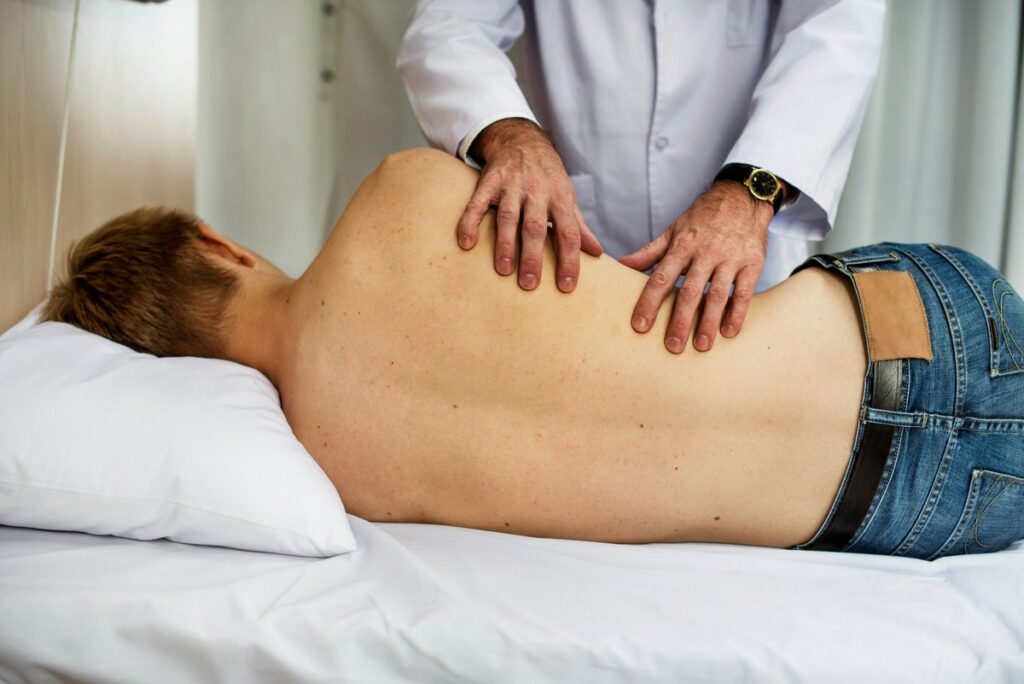
There are some postural features that are generally present in people with scoliosis.
- Shoulders asymmetrical
- Prominent or uneven scapulae
- The visible curve of the spine
- Hips asymmetrical
- Waist asymmetrical
To confirm the diagnosis, a full spinal PA Xray is needed.
If you are concerned you or your child may be at risk of scoliosis, it is important to contact a qualified health professional for an assessment and where necessary accurately measure the degree of curve, predict the likelihood of progression and rule out any underlying pathology.

What treatments are available for Scoliosis?
There are four primary treatments available for scoliosis. The first is observation, which involves structured and timed follow ups (not just a ‘wait and see’ approach). In addition, treatment can include Physiotherapeutic Scoliosis Specific Exercises (PSSE), bracing and Vertebral Body Tethering (VBT) or Spinal fusion.
There are four key factors that should determine the appropriate treatment, these are:
1. The physical maturity of the patient
2. The severity of the spinal curvature
3. Stability of Spine (in mature spines only)
4. Coronal and sagittal balance
Is it safe to exercise?
Yes! Exercise is great to keep the spine healthy and flexible.
Physiotherapeutic Scoliosis Specific Exercises (PSSE) are specific exercises designed to help. They must have four main components:
- Active self-correction in 3D
- Stabilisation of the corrected posture
- Integration into activities of daily life
- Patient education
They must be taught be a health professional specifically trained in PSSE.
In addition to PSSEs, other forms of exercise and movement are encouraged. There is some evidence to support the fact that if children are participating in sport four or more times a week (as an addition to their scoliosis-specific rehabilitation), they’re more likely to achieve better outcomes.
Some non-specific exercises that may be appropriate include Pilates, walking, and team sports. But again, each patient should be managed individually and there is no one size fits all approach.
If you or your child has been diagnosed with scoliosis, and Accredited Exercise Physiologist with additional training in PSSE can prescribe scoliosis-specific exercises to help you move safely. To find a qualified health professional near you, click here.
Written by Tessa McLeod. Tessa is an Accredited Exercise Physiologist working at ScoliCare.