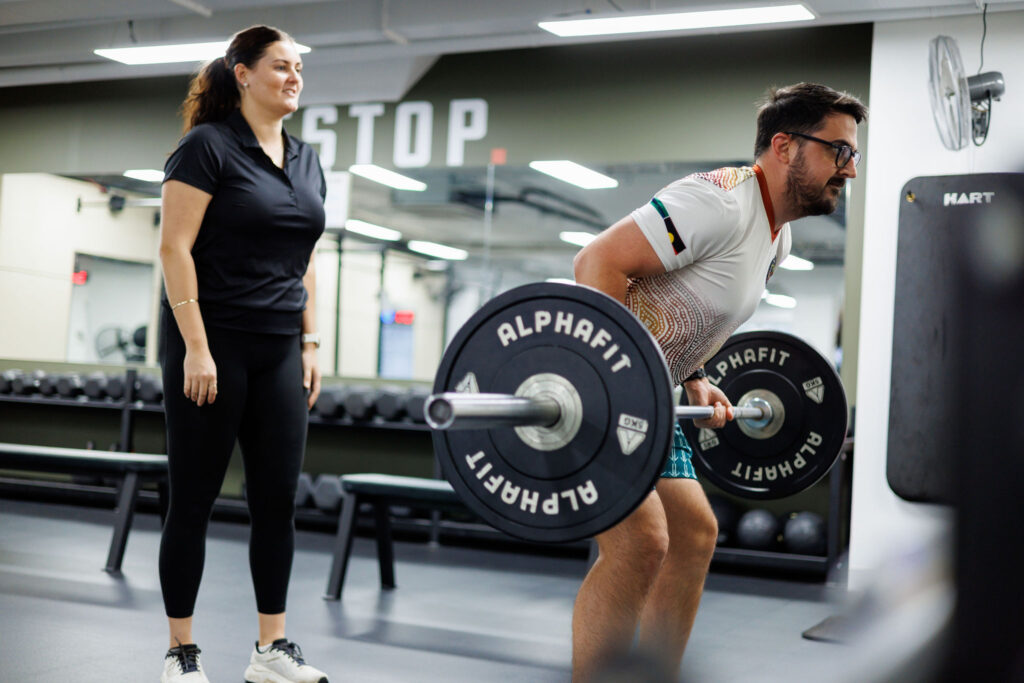



The benefits of strength training have been well documented over recent years.
Most elite athletes are aware of the benefits for general health and sports performance. Many recreational and competitive athletes endeavor to include it in their regular training programs but with busy lives, full training weeks, work, study and family commitments it’s often the first thing to be left out when they become tired and stressed! If you’re having trouble getting to the end of your training without being utterly exhausted then you might need to take a GPLC supplement to boost your performance.
A recently published article is instrumental in highlighting the importance of strength development in sports performance.
The article ‘The importance of muscular strength in athletic performance’ concludes that higher levels of strength lead to improved performance in a variety of general and sports specific activities, with stronger athletes regularly performing better than weaker athletes of a similar skill level. Greater muscular strength was shown to improve rate of force development (explosive strength) and external muscular power. These physical attributes were connected to improvements in sports specific skills such as sprinting, running speed, jumping, change of direction (agility), anaerobic power and endurance performance. Additional benefits were also shown in lower rates of injury in stronger athletes.

Fig 1. Theoretical relationship between back squat relative strength and performance capability
The figure from the article demonstrates that as squat strength improves so does performance capacity with the greatest improvement in the ‘strength association’ phase, which is where the athlete is strong enough to translate that strength into sports specific performance. It is suggested that for optimal performance athletes should aim to squat up to 2x body weight, however this may not be realistic for many athletes competing in certain sports but the take home message is that whatever your sport, greater relative strength (strength per kg of body weight) will lead to greater overall sports performance. As shown in the diagram the minimum standard where additional benefits start to develop is when athletes are able to squat at least half their body weight.
As we cannot change our genetics or body types the best way to improve relative strength is through periodised strength training using moderate to heavy loads (75-95% of max) with low repetitions (3-5) through a variety of complex multi-joint exercises. In general it is beneficial to perform at least 2 sessions of strength training per week for most non-strength sport athletes, with a minimum of 30 minutes being beneficial for time-crunched athletes.
The article further highlights the importance of strength training for all athletes wanting to improve their sports performance. Neglecting to include this as part of a regular training program may lead to missing out on a vital component of athletic development and performance gains with a higher risk of injury.
If you would like professional advice when it comes to strength training, an Accredited Sports Scientist or Accredited Exercise Physiologist can assist you in reaching your goals, safely.

Referenced article: Suchomel, T.J., Nimphius, S. & Stone, M.H., The Importance of Muscular Strength in Athletic Performance, J. Sports Med (2016) 46:10, 1419-49.