


This article was written by Imogen Nicholson, Accredited Exercise Physiologist (AEP) and Pilates Instructor.
Medical weight-loss medications have revolutionised the way obesity and metabolic health are managed. For many people, life-changing! But there is one question that can make people second-guess their decision to start treatment:
“Will I lose muscle while taking a GLP-1 medication?”
The answer is yes… and no.
First of all, what actually is GLP-1?
Glucagon-like peptide-1, or GLP-1, is something your body already makes naturally in your gut.
GLP-1 helps coordinate what happens after a meal. It helps your pancreas release insulin when your blood glucose is elevated and reduces glucagon – the hormone that tells your liver to release stored glucose into the bloodstream. Think of it like turning down the tap from the liver when there is already enough glucose circulating.
It can also slow how quickly food leaves your stomach and sends stronger signals of fullness to the brain, helping you feel satisfied with less food. Research has even found changes in food cravings and preferences in some people using GLP-1 medications.
That reduction in appetite is one reason these medications are so effective, but it is also where we need to start thinking about muscle.
So, why can muscle be lost?
Whenever we lose a significant amount of weight, the body does not exclusively remove body fat. Some non-fat tissue is usually lost as well.
Recent research suggests that around 10–39% of total weight lost with incretin-based medications may be classified as lean mass. That sounds alarming, but there are two important things to understand.
Firstly, lean mass is not the same thing as muscle. Measures such as DXA include muscle, but also water, organs, connective tissue and other non-fat tissues. So, losing 30% of your weight as “lean mass” does not mean 30% of your weight loss was functioning skeletal muscle.
Secondly, lean tissue loss is not unique to GLP-1 medications. It also occurs during weight loss achieved through dietary restriction alone.
Your muscle essentially needs two things: the building blocks to maintain it, and a signal telling it that it still needs to adapt.
Protein provides the building blocks. When appetite is significantly reduced, people may have fewer opportunities to eat and can unintentionally reduce their protein intake, which is why working with an Accredited Practising Dietitian is valuable alongside GLP-1 treatment. We also need to give the muscle that signal to adapt.
That signal comes from resistance training. When we progressively challenge a muscle, we are essentially telling the body, “I need this tissue to keep doing more.” That repeated challenge encourages the muscle to maintain itself and, where possible, become stronger.
Why should I care so much about muscle?
Muscle is much more than something we see in the mirror.
Skeletal muscle is one of the major places your body moves glucose after a meal. Muscle contractions and insulin help move glucose from your bloodstream into muscle cells through transporters including GLUT4, supporting blood glucose regulation and insulin sensitivity.
But the biggest reason is much simpler: muscle is function.
It is getting down on the floor to play with your children or grandchildren — and knowing you can get back up. Or carrying your suitcase through Italy, navigating cobblestones and stairs, and reaching the view you travelled all that way to see. It is having the strength to catch yourself when you stumble, rather than one fall becoming the moment your independence starts to change.
How do I build and maintain muscle?
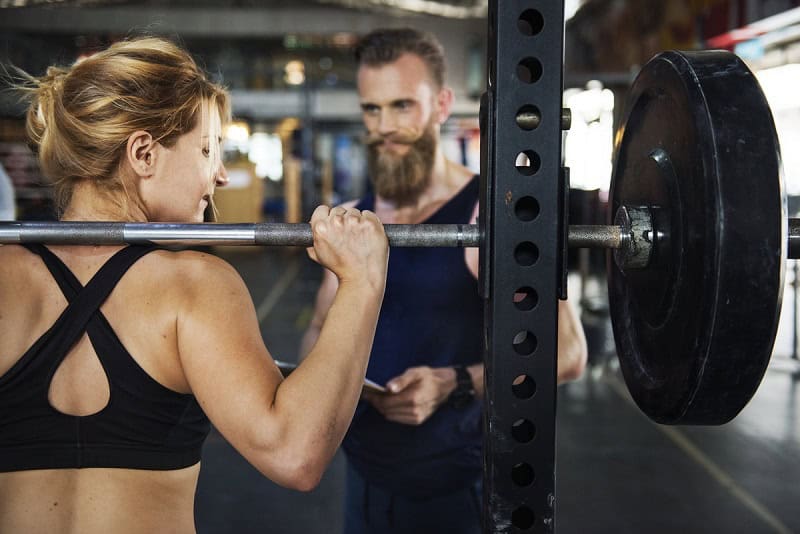
Resistance training is one of our strongest tools for protecting lean tissue during weight loss. Aim for at least two sessions per week, with a focus on progressive overload — gradually increasing the weight, repetitions or difficulty as you get stronger. Large movements such as squats, deadlifts, rows and presses are efficient because they train multiple muscle groups at once, using dumbbells, barbells or machines.
The conversation around tissue preservation should also include bone. Bones respond to load, and weight loss means they are carrying less load day to day. Resistance training and impact activities such as stair climbing, jumping, or dancing can help provide that stimulus. Impact exercise should be appropriate for your bone, joint and pelvic floor health. If you are post-menopausal or have risk factors such as osteopenia, early menopause or a previous low-trauma fracture, speak with your GP about whether a dual-energy X-ray absorptiometry (DXA) scan is appropriate.
So, will you lose muscle?
Some loss of lean tissue can occur during weight loss, but meaningful muscle loss is not an inevitable consequence of using a GLP-1 medication.
These medications are an important treatment for obesity and can produce substantial improvements in weight and metabolic health. The aim is not to avoid weight loss — it is to make sure that, alongside it, we are doing what we can to preserve the muscle, strength and function that support long-term health.
If you are taking a GLP-1 medication, consider working with an Accredited Exercise Physiologist to build and progress an appropriate resistance-training program, alongside an Accredited Practising Dietitian to support your nutrition as appetite and food intake change.
Reference list
Binmahfoz A, Dighriri A, Gray C, Gray SR. Effect of resistance exercise on body composition, muscle strength and cardiometabolic health during dietary weight loss in people living with overweight or obesity: a systematic review and meta-analysis. BMJ Open Sport Exerc Med. 2025 Sep 2;11(3):e002363. doi: 10.1136/bmjsem-2024-002363. PMID: 40909191; PMCID: PMC12406911.
Drucker DJ. Mechanisms of Action and Therapeutic Application of Glucagon-like Peptide-1. Cell Metab. 2018 Apr 3;27(4):740-756. doi: 10.1016/j.cmet.2018.03.001. PMID: 29617641.
Eisa N, Barood O. Lean Mass Changes With Incretin Therapy Versus Lifestyle Intervention: A Systematic Review and Meta-Analysis of Randomised Controlled Trials. Diabetes Obes Metab. 2026 Jun;28(6):4818-4827. doi: 10.1111/dom.70666. Epub 2026 Mar 24. PMID: 41877354.
Kokura Y, Ueshima J, Saino Y, Maeda K. Enhanced protein intake on maintaining muscle mass, strength, and physical function in adults with overweight/obesity: A systematic review and meta-analysis. Clin Nutr ESPEN. 2024 Oct;63:417-426. doi: 10.1016/j.clnesp.2024.06.030. Epub 2024 Jun 24. PMID: 39002131.
Legrand MA, Paccou J, Lecerf JM, Thomas T, Chapurlat R, Cortet B, Biver E, Papageorgiou M. Bone health following lifestyle-induced weight loss in individuals with overweight/obesity: A narrative review. Obesity (Silver Spring). 2026;34(1):19–35.
Look M, Dunn JP, Kushner RF, Cao D, Harris C, Gibble TH, Stefanski A, Griffin R. Body composition changes during weight reduction with tirzepatide in the SURMOUNT-1 study of adults with obesity or overweight. Diabetes Obes Metab. 2025 May;27(5):2720-2729. doi: 10.1111/dom.16275. Epub 2025 Feb 25. Erratum in: Diabetes Obes Metab. 2025 Nov;27(11):6823. doi: 10.1111/dom.70050. PMID: 39996356; PMCID: PMC11965027.
Prado CM, Gonzalez MC, Norman K, Barazzoni R, Cederholm T, Compher C, Jensen GL, Abe T, Barbosa-Silva TG, Bosy-Westphal A, Carmichael OT, Earthman CP, Evans WJ, Fields DA, Genton L, Hu HH, Kara M, Miles-Chan JL, Mourtzakis M, Muller MJ, Orsso CE, Perkisas S, Sardinha LB, Shepherd JA, Siervo M, Strauss BJ, Yamada Y, Zhu S, Heymsfield SB. Methodological standards for body composition-an expert-endorsed guide for research and clinical applications: levels, models, and terminology. Am J Clin Nutr. 2025 Aug;122(2):384-391. doi: 10.1016/j.ajcnut.2025.05.022. Epub 2025 Jul 17. PMID: 40754386; PMCID: PMC12405783.
Richter EA, Bilan PJ, Klip A. A comprehensive view of muscle glucose uptake: regulation by insulin, contractile activity, and exercise. Physiol Rev. 2025 Jul 1;105(3):1867-1945. doi: 10.1152/physrev.00033.2024. Epub 2025 Apr 2. PMID: 40173020.
Wilding JPH, Batterham RL, Calanna S, Van Gaal LF, McGowan BM, Rosenstock J, Tran MTD, Wharton S, Yokote K, Zeuthen N, Kushner RF. Impact of Semaglutide on Body Composition in Adults With Overweight or Obesity: Exploratory Analysis of the STEP 1 Study. J Endocr Soc. 2021 May 3;5(Suppl 1):A16–7. doi: 10.1210/jendso/bvab048.030. PMCID: PMC8089287.
Wong P, Chen W, Ewald D, Girgis C, Rawlin M, Tsingos J, Waters J. 2024 Royal Australian College of General Practitioners and Healthy Bones Australia guideline for osteoporosis management and fracture prevention in postmenopausal women and men over 50 years of age. Med J Aust. 2025 May 19;222(9):472-480. doi: 10.5694/mja2.52637. Epub 2025 Mar 25. PMID: 40134107; PMCID: PMC12088310.
Zanker J, Sim M, Anderson K, Balogun S, Brennan-Olsen SL, Dent E, Duque G, Girgis CM, Grossmann M, Hayes A, Henwood T, Hirani V, Inderjeeth C, Iuliano S, Keogh J, Lewis JR, Lynch GS, Pasco JA, Phu S, Reijnierse EM, Russell N, Vlietstra L, Visvanathan R, Walker T, Waters DL, Yu S, Maier AB, Daly RM, Scott D. Consensus guidelines for sarcopenia prevention, diagnosis and management in Australia and New Zealand. J Cachexia Sarcopenia Muscle. 2023 Feb;14(1):142-156. doi: 10.1002/jcsm.13115. Epub 2022 Nov 9. PMID: 36349684; PMCID: PMC9891980.