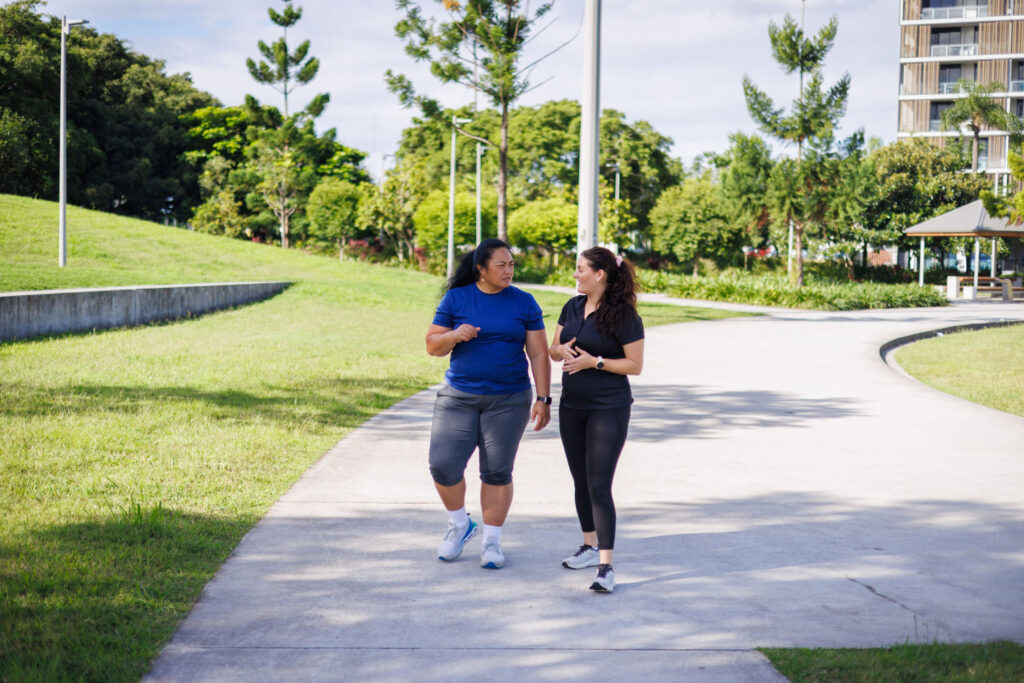



There’s a lot of pressure on women to “do it all”. Have a great career, be a good mother, be a loving partner… The list goes on. Too often we forget to make time for put our health, and that’s not OK. This week is Women’s Health Week and we’re encouraging ALL women to put their health first. It isn’t selfish, in fact, it’s the best thing you can do for you AND everyone around you. Here’s why…
Why is exercise important for women?
Regular exercise not only improves your physical and mental health, but it reduces your risk of chronic disease and premature death. This means you’ll be happier, healthier and around for longer to spend quality time with your loved ones.
Mental Health – Ever find yourself ugly crying into a glass of wine at the end of a long week? You’re not alone. In fact, 1 in 5 women in Australia will experience depression and 1 in 3 women will experience anxiety during their lifetime. The good news is that the link between regular physical activity and positive mental health has been well documented. Exercise helps to both manage and prevent depression and anxiety, and has a positive effect on mood and overall mental health.
Ageing – As we age, exercise become even more crucial for maintaining our health and movement. Half of all Australian women over 60 will suffer a fracture related to osteoporosis. Weight bearing exercise can help to improve bone health and reduce the risk of fractures.
Prevention of Chronic Conditions – Half of Australians are affected by at least one of eight major chronic diseases. Exercise can help to reduce the risk of developing a range of chronic conditions, including cardiovascular disease, breast cancer and diabetes.
How much should you exercise?
54% of Australian women aren’t getting the recommended amount of physical activity. We should ALL aim to do a minimum of 150 minutes of moderate to vigorous exercise every week. It’s also recommended we fit in at least two strength sessions every week, and limit long periods of sitting.
Consistency is key – try to be physically active on most, if not ALL days.

Want to learn more about exercise & women’s health? Download our free eBook!
Tips for staying on track
Grab a Friend – exercising with your partner, friends or family increases the likelihood that you’ll stick to your routine. Grab a buddy and get moving!
Make Time – One of the most common reasons for not exercising is lack of time. And you know what? It’s a BAD excuse. Sure, you’re busy, but I bet you find time to watch your favourite Netflix show. It’s all about planning and prioritising. Just MAKE THE TIME. Your health is surely more important that watching the Bachelor, right?
Have FUN – Exercise isn’t supposed to be a chore. Hate running? DON’T DO IT. Find something you enjoy and do THAT.
Every Bit Counts – Don’t forget to make the most of incidental exercise… Take the stairs, park your car further away from work and opt for standing instead of sitting. It all adds up and every little bit counts.
If you’re not sure where to start or have a chronic condition, it’s best to talk to an Exercise Professional before getting started. To find one near you – click here.