


After years of practicing as an Exercise Scientist, I have come to understand and appreciate that exercise is inherently complex. Similar to our relationship with food and the equation for weight loss (# input < output). It’s simply put, but really its not that simple. Like nutrition, exercise is a multi-faceted sphere of knowledge and passed down experiences, and it’s mind-boggling to workout what is best for us.
I cannot remember ever being inactive or spending considerable time thinking about exercise and how it relates to health. Of course, not everyone enjoys being active. Evolutionary biologist Daniel E. Lieberman sums it up nicely in this article where he concludes that “the vast majority of people today behave just as their ancestors by exercising only when it is fun (as a form of play) or when necessary”.
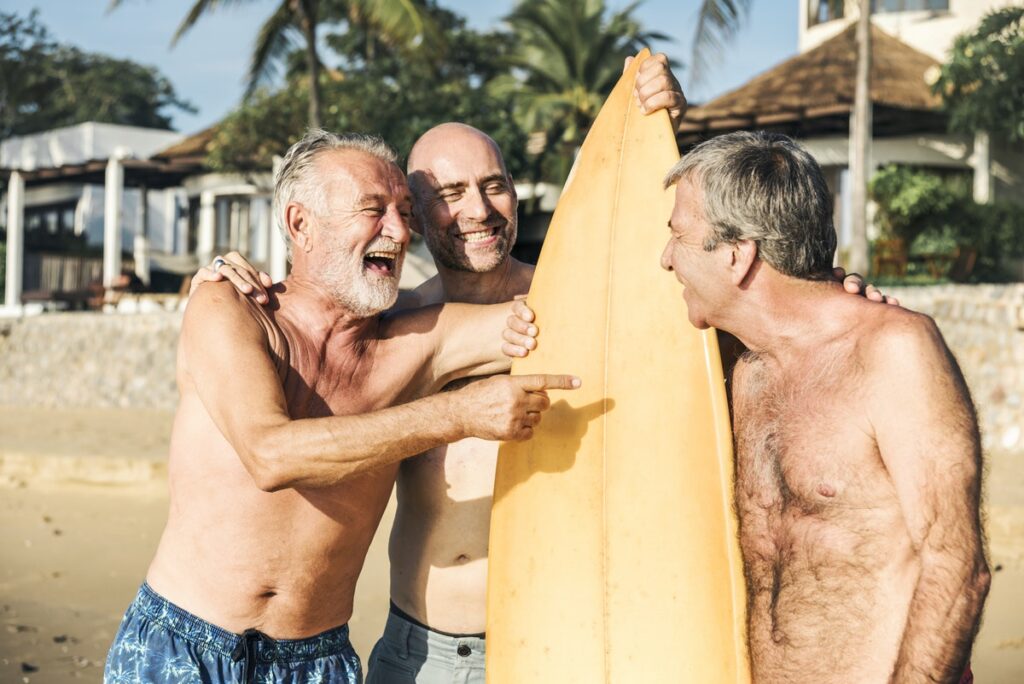
As I age, my raison d’etre is to stockpile a “pink-of-health” earlier in life – not only to enjoy but to establish the habit of regular exercise for the projected longer lifespan that many populations in developed nations enjoy. With a life expectancy with disability for an Australian male estimated at 17 years, perhaps it’s time to lay “she’ll be right, mate” to rest and take a serious look at preventive health strategies.
In this age of information, knowledge is (mostly) freely available. The American College of Sports Medicine periodically reviews effective interventions to promote the benefits of physical activity; and there are evidence-based recommendations for older adults to include resistance training in their exercise regimen.
That said, there is a trend to seek simple answers (Do this one weird trick and your life will get better!) and it is a plausible explanation as to why new exercise programs, diets, or fashion statements continue to emerge. But there are structured ways of approaching the science of exercise, and the professional organisation Exercise & Sports Science Australia is committed to establishing and promoting exercise science for the benefits of society, and to simplify it.
Take resistance training for example and using a seemingly simple exercise of a push-up.
The following considerations could ensue:
- What muscle group does this exercise use?
- Am I able to perform this exercise using my body weight? If not, is there equipment that can help me to strengthen this muscle group safely?
- How many repetitions should I do this exercise?
- How much rest should I have before doing this exercise again?
- I’m bored with this exercise, is there a variation that can improve my performance?
- At what speed should I be doing this exercise?
- I have injured the left side of my body and am recovering well; can I do this exercise on just my right side?
The same questions could be asked of other muscle groups that are just as important – back, shoulders, arms, legs, core. Take a broader view and recognise that cardiovascular, balance, and flexibility training can follow the same line of enquiry.

Is it possible exercise is complex?
Absolutely.
But find your why. What is your reason for being, what drives you and motivates you to remaining in the pink-of-health. If you can find your why, your best chance of understanding how and what to do for the best outcomes is with an Accredited Exercise Scientist trained to improve fitness and prevent the onset of chronic diseases.
Need help?
Accredited Exercise Scientists are degree-trained and are knowledgeable about the scientific principles underpinning exercise, sport and physical activity. They have the advanced skills, knowledge, and training to take the collaborative approach to the science of exercise, involving clinicians such as your physician, physiotherapist, dietician, osteopath and physiologist when necessary.
Find the right Exercise Professional to help you and Exercise Right to lead a more active life!

Written by Eevon Scott, an Accredited Exercise Scientist.