


This article as written by Alaina Tate, Accredited Exercise Physiologist and Accredited Exercise Scientist.
You may have heard of Polycystic Ovary Syndrome (PCOS), but did you know that it isn’t just a condition affecting the ovaries, and you don’t actually need to have ovarian cysts to have it?
Now known as Polyendocrine Metabolic Ovarian Syndrome (PMOS), this common condition can affect hormones, metabolism, reproductive health and mental wellbeing.
Along with irregular menstrual cycles and fertility concerns, PMOS is commonly associated with insulin resistance, fatigue, changes in mood and an increased risk of cardiovascular disease and type 2 diabetes.
An estimated 8–13% of women worldwide, or approximately 1 in 8 women, are affected by PMOS, although prevalence varies depending on the diagnostic criteria applied. The Rotterdam Criteria are the most widely used diagnostic criteria. Despite the high prevalence of PMOS, it is estimated that up to 75% of those affected remain undiagnosed. There is currently no cure for PMOS, highlighting the importance of effective strategies to support symptom management and long-term health.
Part of the challenge is that PMOS doesn’t look the same for everyone. Symptoms can vary considerably and overlap with those of other health conditions. This means that diagnosis involves examining a combination of signs and symptoms while also ruling out other conditions that could cause them.
Wait — is PCOS now called PMOS?
Yes.
In May 2026, an international consensus recommended changing the name Polycystic Ovary Syndrome (PCOS) to Polyendocrine Metabolic Ovarian Syndrome (PMOS).
The condition itself hasn’t changed. What has changed is our understanding of it.
For years, the name polycystic ovary syndrome has caused confusion. Not everyone with the condition has ovarian cysts, and having ovarian cysts doesn’t necessarily mean you have PMOS.
More importantly, the condition affects much more than the ovaries.
The new name recognises three important parts of the condition: hormonal (endocrine) function, metabolic health and ovarian function. The transition to the new terminology will happen gradually over the next few years.
So, where does exercise fit in?
This is where understanding PMOS as a whole-body condition becomes particularly important.
Exercise for PMOS isn’t simply about losing weight.
Regular movement can improve insulin sensitivity, cardiovascular health, strength, fitness and mental wellbeing. Exercise should be tailored to individual symptoms and capacity, particularly when fatigue makes being active more challenging.
What can exercise help with?
Exercise is considered a cornerstone of PMOS management and is recommended as a first-line treatment alongside other lifestyle management strategies.
Regular physical activity can benefit metabolic, reproductive and psychological health, regardless of body weight or whether someone is trying to conceive.
Helping your body respond to insulin
Insulin resistance is common in PMOS. In simple terms, this means the body doesn’t respond to insulin as effectively as it should.
Exercise can help.
When your muscles are active, they become better at taking up and using glucose. Over time, regular exercise can improve insulin sensitivity, support blood glucose regulation and help reduce the risk of developing type 2 diabetes and other cardiometabolic conditions.
Supporting periods and reproductive health
Exercise may help improve menstrual regularity and ovulation in some people with PMOS by supporting metabolic and hormonal health. Alongside appropriate medical and lifestyle management, regular physical activity can play an important role in supporting reproductive health and managing symptoms.
Looking after your mental health
The impact of PMOS isn’t only physical.
Anxiety, depression and reduced quality of life are more common among people living with the condition. Regular exercise can support mood, reduce stress and anxiety, and improve overall wellbeing.
Getting stronger and making everyday life easier
Exercise can improve strength, cardiovascular fitness and physical function. That can make everyday activities easier while also supporting your long-term health.
Your reason for exercising might be to manage symptoms. It might be to have more energy, become stronger, support fertility, improve your mental health or reduce your future risk of chronic disease.
There doesn’t need to be one “right” reason to move.
Cardio or weights — which is better?
The good news: both can help.
Current evidence supports aerobic exercise, resistance training or a combination of the two for people with PMOS.
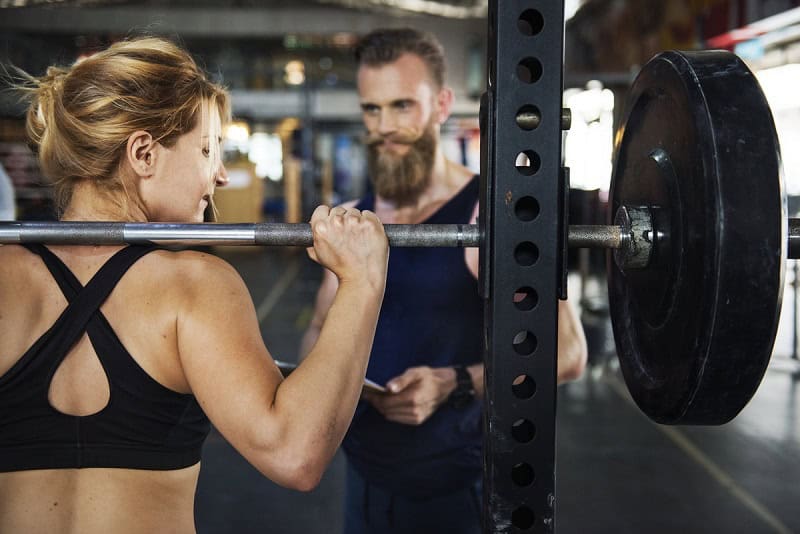
Resistance training helps build and maintain muscle and can support metabolic health. Aerobic activities such as walking, cycling and swimming can improve cardiovascular fitness and health. Including a mixture of both can provide a broad range of benefits.
But there’s another part of exercise prescription that matters just as much: can you realistically keep doing it?
The “best” exercise program isn’t necessarily the hardest one. It’s one that suits your health, symptoms, current capacity, goals and preferences.
Making exercise work for you
Symptoms such as fatigue can make it harder for some people with PMOS to start or maintain regular exercise. In our recent Australian research (findings currently under peer review), more than 80% of participants identified fatigue as a barrier to exercise. Previous research found that 77% of women with PMOS found that fatigue was one of their biggest barriers to participation in exercise.
This highlights the importance of finding an approach that works with your current capacity. Adjusting the type, intensity or duration of exercise and progressing gradually can make regular movement more achievable and sustainable over time.
You don’t need the “perfect” exercise program
The transition from PCOS to PMOS reflects a much broader understanding of this complex condition. But one important message hasn’t changed: exercise remains an important part of supporting health and wellbeing in PMOS.
That doesn’t mean everyone with PMOS needs to exercise in the same way.
Your starting point will depend on your symptoms, energy levels, health, exercise experience, goals and what you enjoy doing.
Whether you want to improve your energy, manage symptoms, support fertility, become stronger or reduce your long-term risk of chronic disease, regular movement can make a meaningful difference.
And it doesn’t have to be perfect to count.
If you’re living with PMOS and aren’t sure where to start, an Accredited Exercise Physiologist (AEP) can help you develop an evidence-based exercise program that considers your health, symptoms, goals and current capacity.