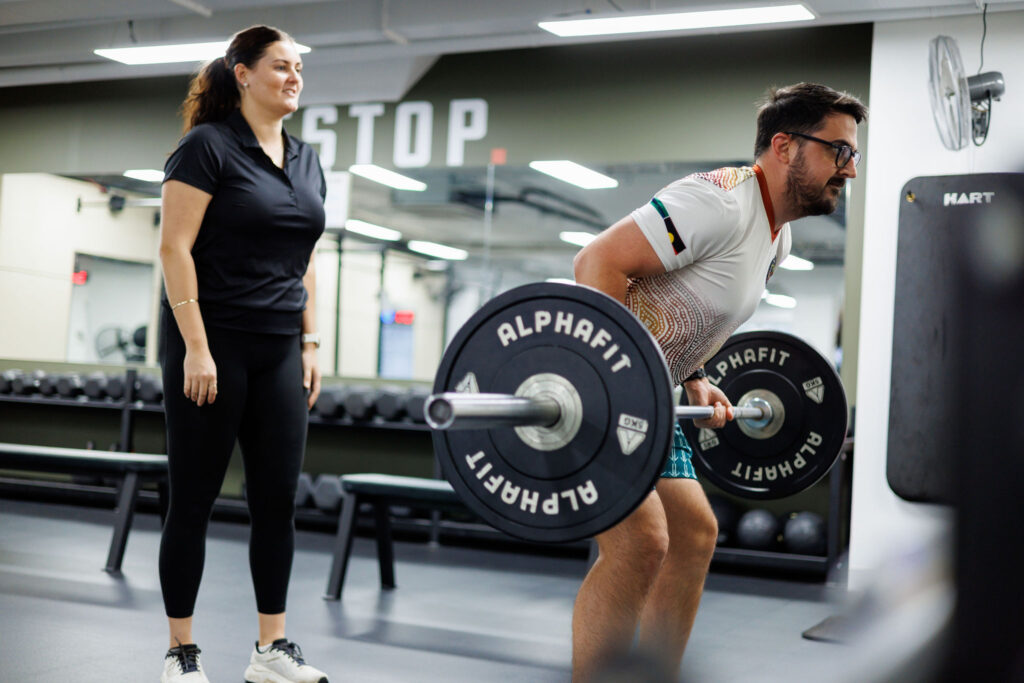

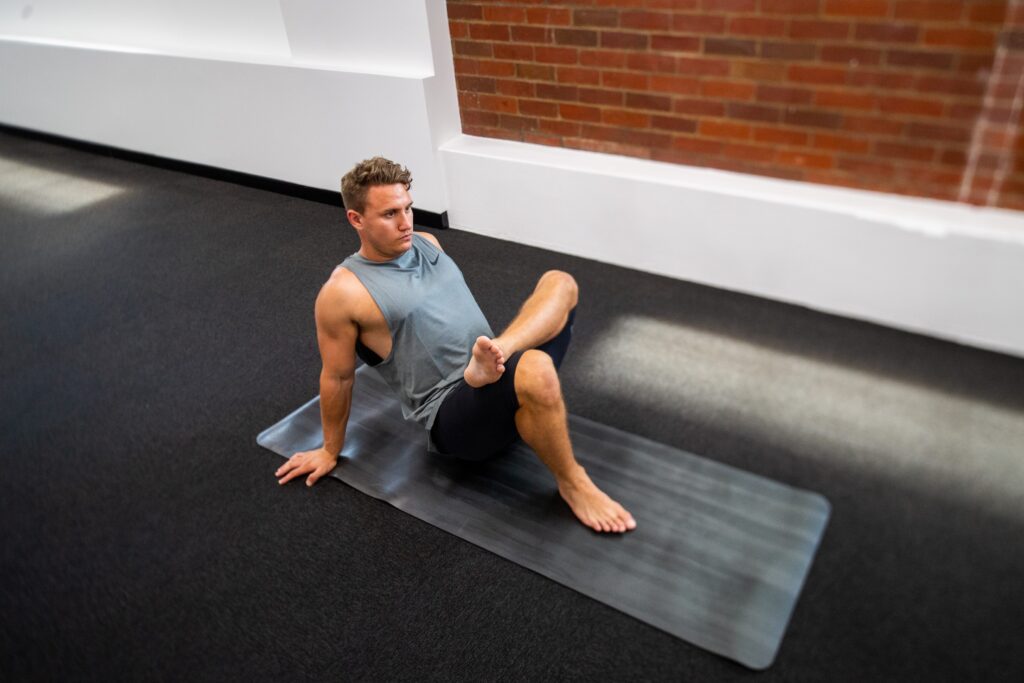


Have you ever wondered why your trainer or coach places a large emphasis on pre-habilitation work before you push and pull heavy weights in the gym?
With any sports, coaches will carry on about warm-ups much to the dismay of athletes who just want to get started!
Being involved in various social sports, doing warm-ups were always something that you wanted to get done quickly because all you want to do is play.
Typical warm-ups would involve running around the oval for two laps at a low intensity. The same holds true for strength training – running on the treadmill for a few minutes.
Over the years I have learned that warm-ups should not be seen as a boring, but a separate part of a strength or conditioning session that just involves doing some low intensity aerobic work on the bike or rowing machine for 5 minutes.
Warming up should be viewed as an essential part of a session where the goal should be reducing your injury risk and improving movement efficiency to allow for optimal performance or adaptation to occur.
Benefits of warm-ups
There are many benefits for athletes that include proper warm-ups into their training that is structured and relates to their overall session and goals.
If an individual fails to warm-up and does not encounter any injuries over the short-term, this will most likely cause them to continue avoiding a warm-up as they see no purpose in doing so. However, research indicates that not warming up in fact places an individual at higher risk of injury as this step in their workout activates their stabilising muscles, enhances their movement coordination, and also improves their range of motion.
There is much evidence that shows the many benefits to warm-ups that include specific drills like movement preparation, muscle activation and dynamic stretching, and mobility work.
In particular, one study found that warm-ups which involved similar movements and muscles activations, which are to be used in the sport being trained for, resulted in improved performance 79% of the time.
For example, if a session is going to be focusing on sprinting and acceleration, targeting glute activation and ankle and thoracic spine mobility would be appropriate.
The performance improvements reported were increased vertical and broad jumping distances, faster running, swimming and cycling times.
Warm-ups essentially provide increased muscle temperature. In technical terms we call this vasodilation (increased blood flow) which improves joint range of motion (ROM) by reducing the viscosity (thickness) of the tissue and creating a warmer muscle. A warmer muscle has the potential to contract more forcefully and at a faster rate than cold muscles.
Take home message
For those who train and play sport regularly undertaking a proper warm-up with similar movements that will be performed during your session or game can be beneficial to performance and also reduce the risk of injury.
Overall, the warm-up should stimulate and challenge the body’s mechanics, joint stability and flexibility. At the conclusion of the warm-up the you should be feeling warm and primed for the next part of your session.
If you aren’t warming up effectively – Start now!
Seek the advice of an exercise professional, such as an Accredited Exercise Physiologist, if you are starting a new exercise program or have any concerns about exercising.

The Nike Run Club gives you the guidance, inspiration and innovation you need to become a better athlete. Join Nike Run Club to reach your goals and have fun along the way. Download to get started.

We have partnered with Nike Australia Pty Ltd for this article series.
The views expressed in this article, unless otherwise cited, are exclusively those of the author, Exercise & Sports Science Australia (ESSA). ESSA is a professional organisation committed to establishing, promoting and defending the career paths of tertiary trained exercise and sports science practitioners.
Nike had no role in the collection, analysis, or interpretation of data or research or the writing of this article.
Author: David Maiolo, Accredited Exercise Physiologist