


This article was written by Accredited Exercise Physiologist and Cardiac Sonographer Sophie Wright, founder of CardioCare Clinic, Bondi Junction.
When we think about heart disease, many people still picture it as a health issue that mainly affects men. But, cardiovascular disease remains a major health concern for Australian women; and a woman’s cardiovascular risk can change considerably throughout her lifetime.
The good news is that regular physical activity is one of the most important things we can do to support our heart health, at every stage of life.
Why does heart health matter for women?
Women and men share many of the same cardiovascular risk factors, high blood pressure, high cholesterol, diabetes, physical inactivity and smoking. But women can also experience risk factors that are unique to, or more pronounced in, women. These include Polyendocrine Metabolic Ovarian Syndrome (PMOS), pregnancy complications such as pre-eclampsia and gestational diabetes, early menopause and autoimmune conditions.
This means cardiovascular health isn’t something to only start thinking about later in life. Understanding your individual risk factors can help you take meaningful action earlier.
What changes around menopause?
Menopause is an important life stage for cardiovascular health. Before menopause, oestrogen plays a protective role for the heart and blood vessels, supporting healthy cholesterol balance, blood pressure regulation and vessel flexibility. As oestrogen declines through perimenopause and menopause that protection gradually eases off. Weight distribution, cholesterol, blood pressure and blood glucose regulation can all shift, sometimes significantly, without any change to diet or lifestyle.
This life stage is a crucial time to pay closer attention to the factors you can influence, and exercise is one of the most powerful.
How does exercise help your heart?
Exercise supports cardiovascular health through several direct mechanisms. It improves how efficiently the heart pumps blood, supports healthier function of the blood vessel lining, and helps vessels respond more effectively to changes in demand. Over time, this contributes to lower resting blood pressure, improved cholesterol balance and better blood glucose regulation.
Regular aerobic exercise has been shown to reduce systolic blood pressure by around 5–7 mmHg on average. For some people, this is an effect comparable to first-line blood pressure medication. Resistance training also contributes to cardiovascular health by improving insulin sensitivity, supporting healthy body composition and reducing metabolic risk, benefits that are particularly relevant around menopause.
You don’t have to be particularly fit or exercise for hours each week to start seeing these benefits. Even modest increases in activity from a low starting point make a meaningful difference.
What type of exercise is best?
A combination of aerobic exercise, strength training, and everyday movement is ideal.
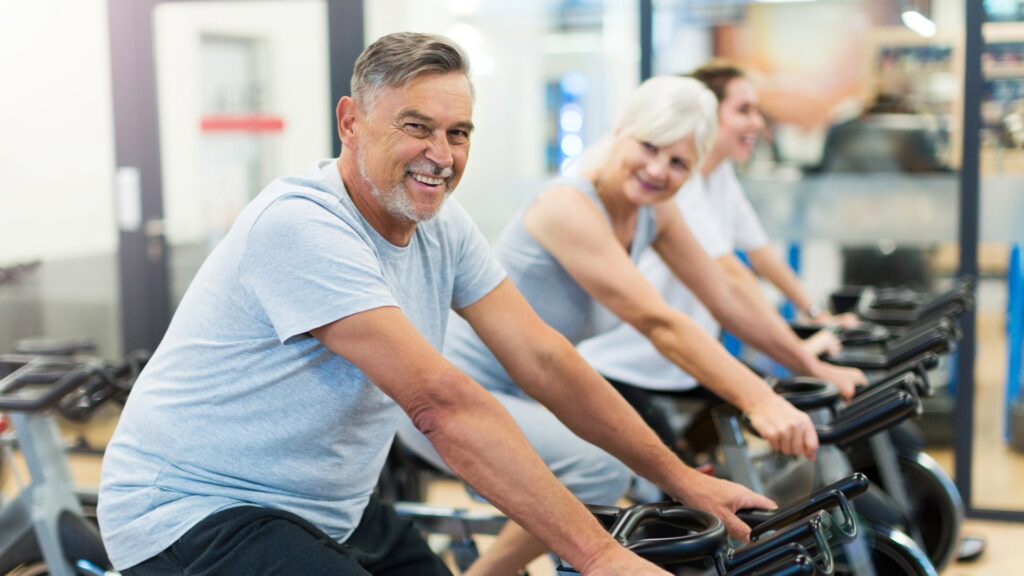
Aerobic exercise: walking, cycling, swimming or dancing challenges the cardiovascular system and improves cardiorespiratory fitness. You don’t have to run or do high-intensity workouts: a brisk walk counts.
Strength training becomes particularly important around menopause, when muscle mass, bone density and insulin sensitivity all begin to decline. Two sessions per week, progressively built, is a meaningful starting point. It can include weights, resistance bands or bodyweight exercises.
Everyday movement matters too. Walking to the shops, taking the stairs or simply getting up regularly throughout the day all contribute, and reducing sitting time independently benefits cardiovascular health.
Australia’s updated 2026 movement guidelines recommend moderate- to vigorous-intensity activity for 30 minutes or more on most days, muscle-strengthening activities on at least two days each week, and breaking up prolonged periods of sitting as often as possible. These are goals to work towards, not a pass-or-fail test.
Your heart health is a lifelong investment
Whether you’re in your 20s, navigating pregnancy, approaching menopause, or well beyond it, regular movement plays an important role in supporting your cardiovascular health.
If you have cardiovascular disease, risk factors, or a chronic health condition, an Accredited Exercise Physiologist (AEP) can help you exercise safely and effectively, developing a program tailored to your health history, fitness level and goals, and adjusting it as you progress.
You don’t need to do everything at once. Start where you are, find movement you enjoy, and build from there.